Case Study

Jackpot Management System Redesign.

Scroll
Project
The Jackpot Management System (JMS) is a critical operational platform used by casino managers to configure jackpots, manage prize pools, and control gaming machines across the floor — redesigned from a fragmented legacy interface into a streamlined, modern enterprise tool.
Role
UX Research
Product Design
Stakeholder Engagement
Platform
Web Platform
Desktop
Deliverables
UX Strategy
Wireframes & IA
User Journeys
High-Fidelity UI Designs
JMS EGM Floor Map
JMS Pool Manager

01 — Where We Started

The Challenge
& Objectives

Redesigning a legacy system built on end-of-life technology — where cluttered layouts and poor information hierarchy were slowing critical operational tasks and posing real security and operational risk.

The Challenge

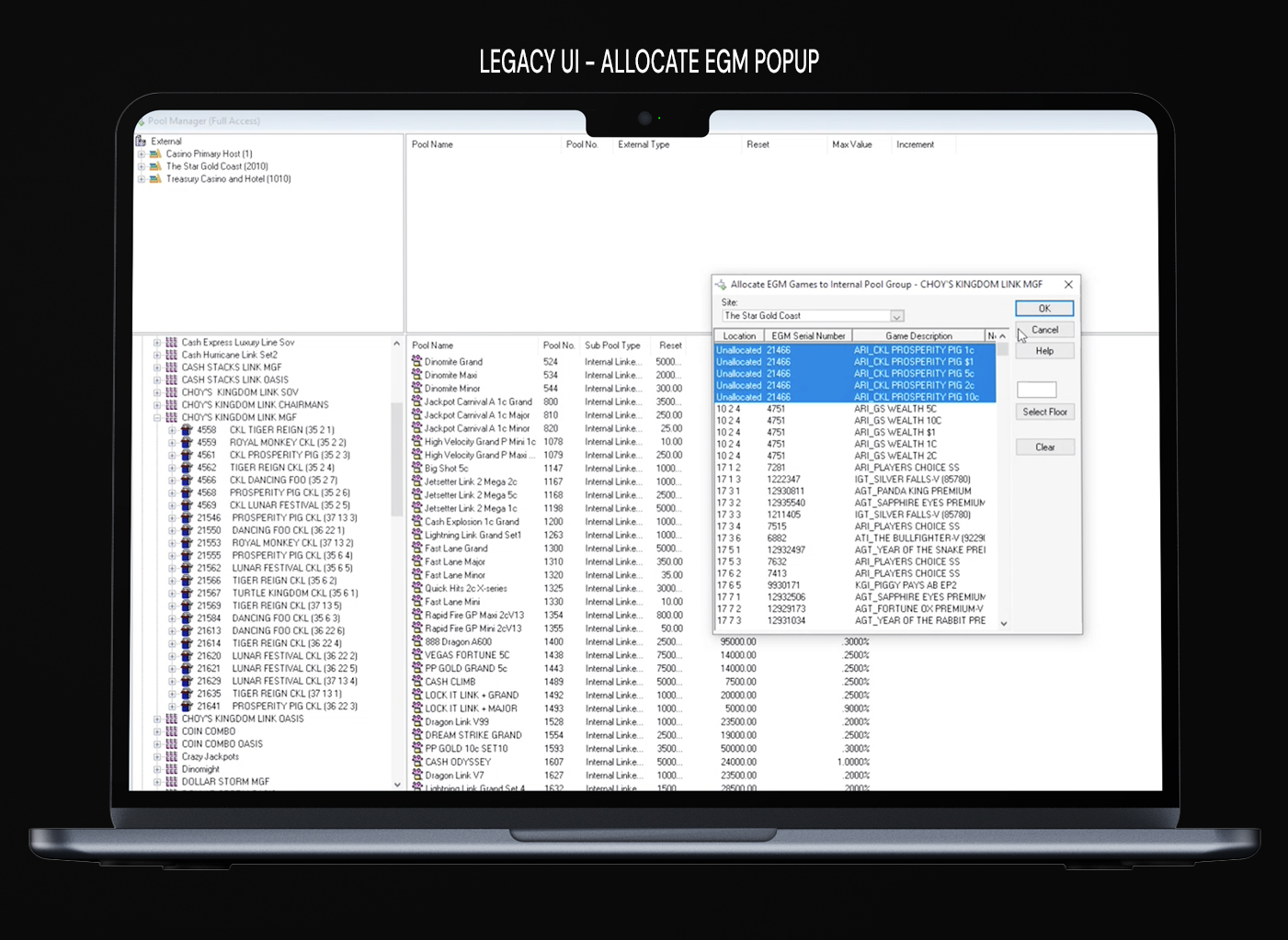
Redesigning a legacy system built on PowerBuilder that was end-of-life and posed operational risk. Cluttered layouts and poor information hierarchy led to inefficient workflows and slower task completion. While powerful, the system was not intuitive and frustrated experienced users during critical operational tasks.

The Objectives

Reduce operational risk during jackpot configuration and enable faster, real-time decision-making across the gaming floor — improving visibility and status of gaming machines while reducing the time required to complete critical tasks, and transitioning from legacy tool to modern enterprise platform.

02 — UX Discovery

UX Workshops
& Discovery

Collaborative workshops with product, engineering, and operations teams mapped workflows, surfaced pain points, and shaped early design directions through iterative A/B testing.

Phase 01
Legacy System Audit
Audited the existing PowerBuilder interface, cataloguing workflows and redundant steps against real operational needs.
Phase 02
Stakeholder Workshops
Sessions with operations, product, and engineering teams defined pain points and prioritised workflows.
Phase 03
Workflow Mapping
Mapped critical flows — Floor Mapping, Unallocated EGMs, EGM Allocation — into single-screen interactions.
Phase 04
A/B UI Testing
Layout approaches were A/B tested with operations staff to find the fastest path to decisions.

Mapping User Flows

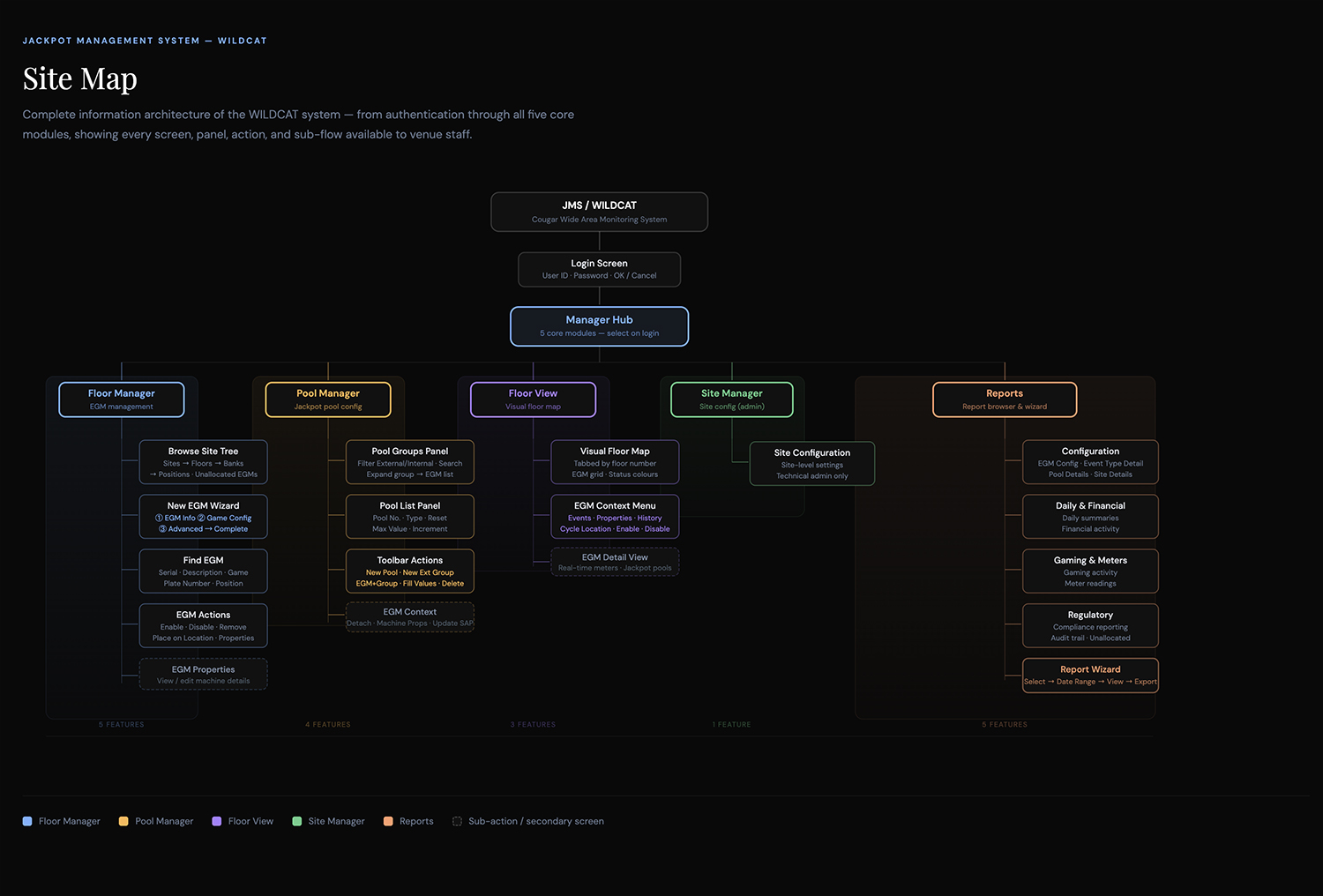
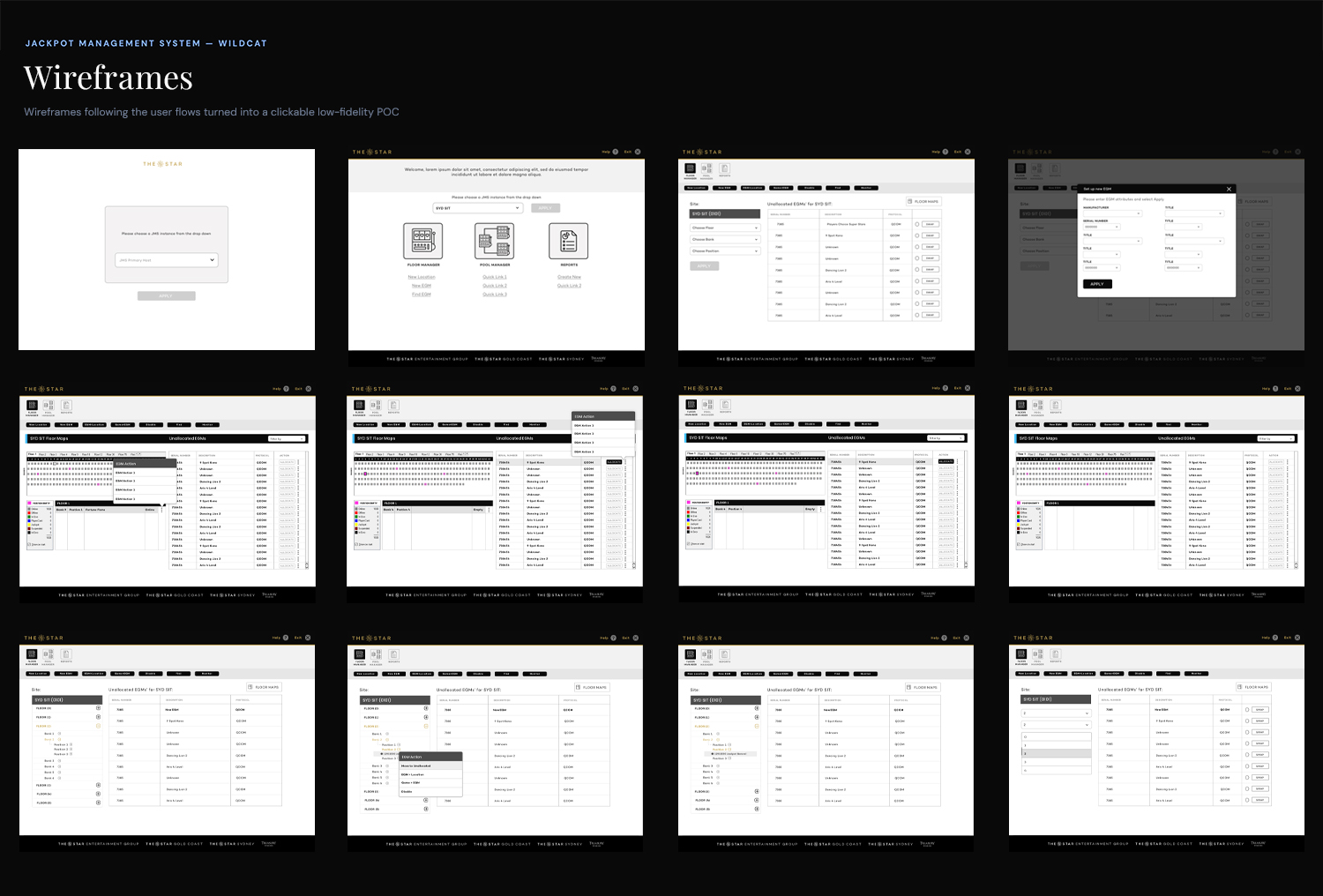
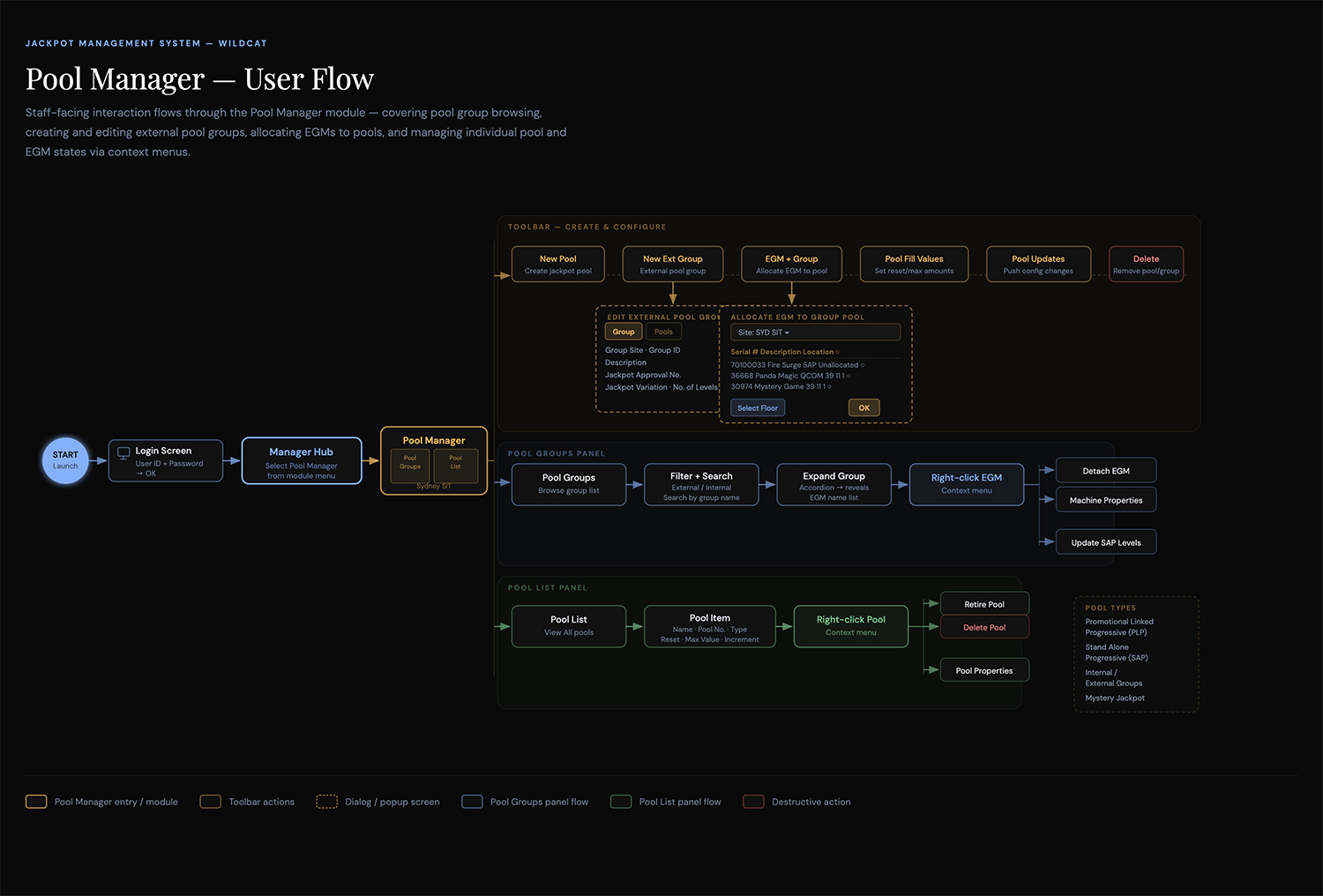
User flows across the Floor Manager and Pool Manager modules were mapped end-to-end — establishing a clear sitemap to drive the development of low-fidelity wireframes and a functional, clickable proof of concept.
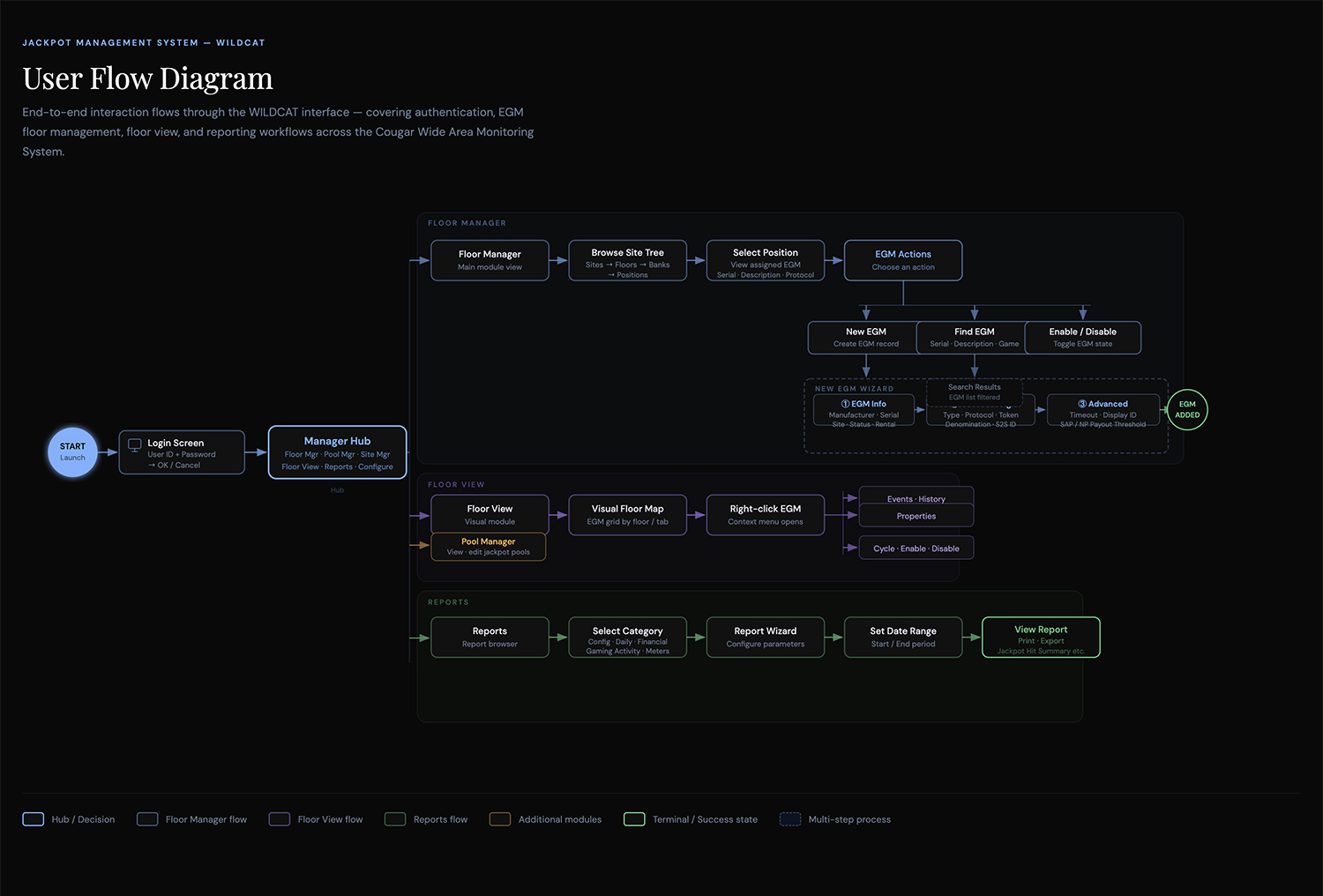
User Flow Diagram
Pool Manager User Flow
Site Map
Wireframes
Drag to explore

03 — High Fidelity

Final Platform
Enterprise UI

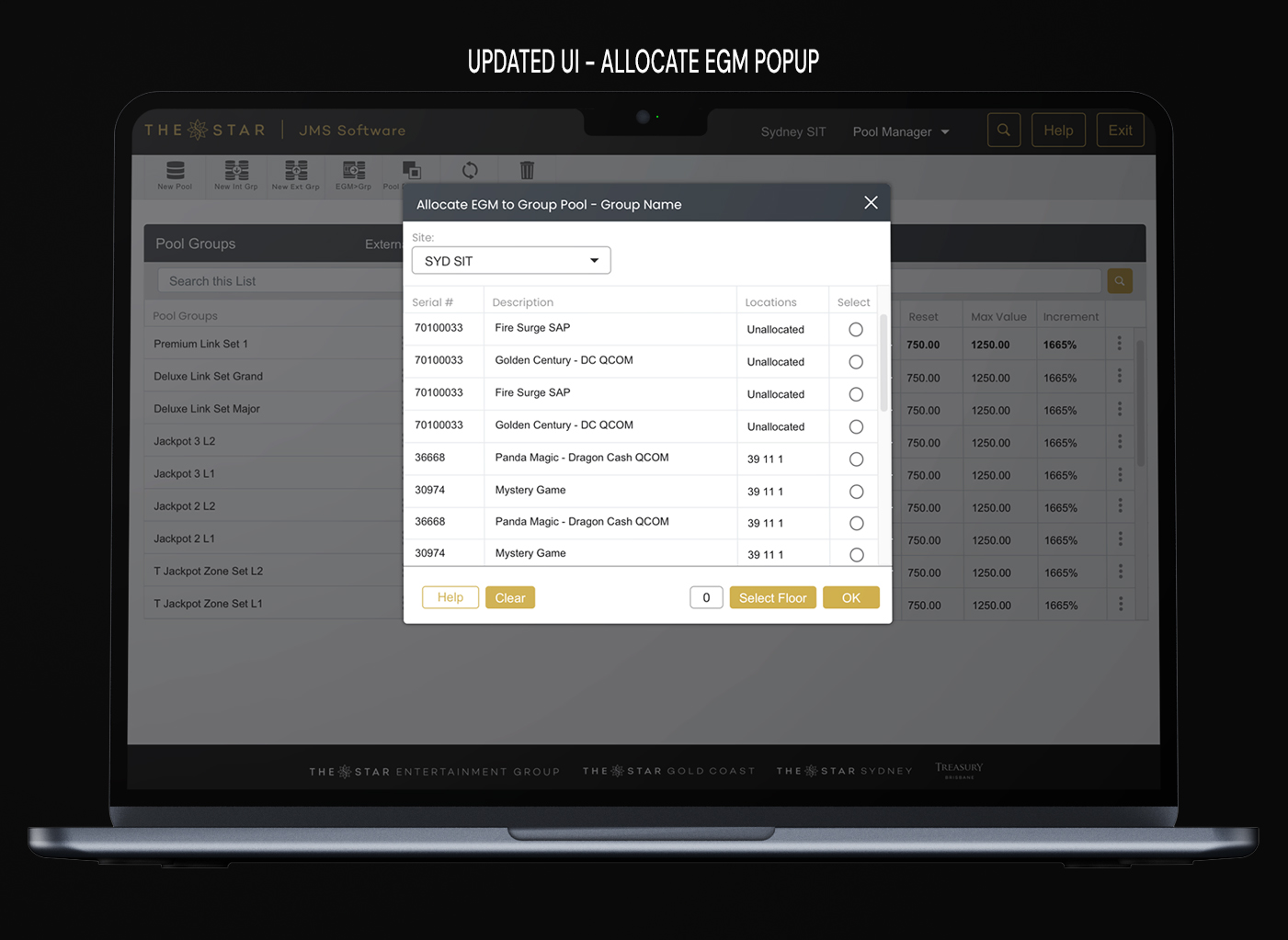
The final JMS delivered a modern enterprise interface replacing fragmented legacy workflows with streamlined, single-screen interactions — supported by a clear visual system and a one-page project style guide.
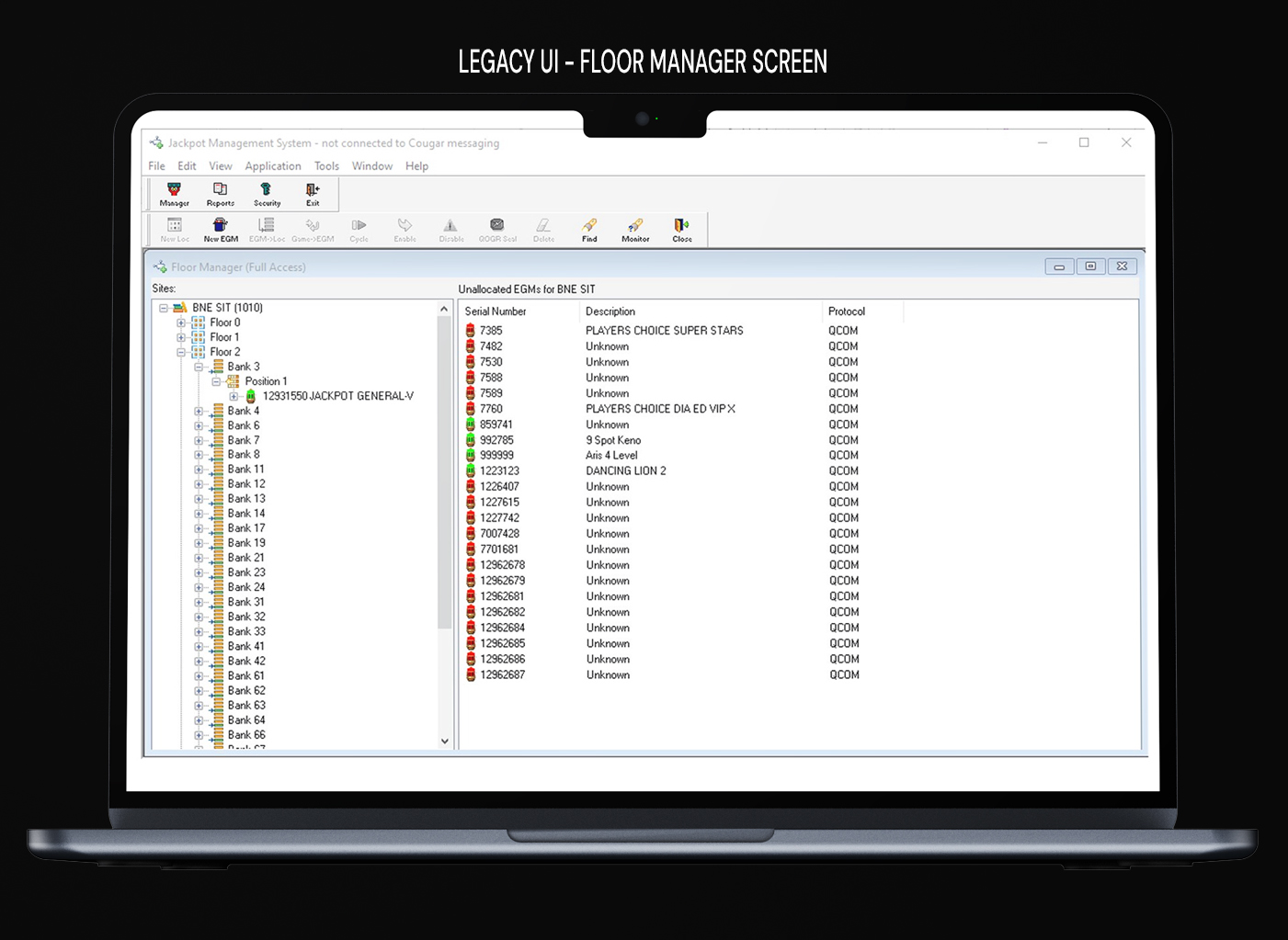
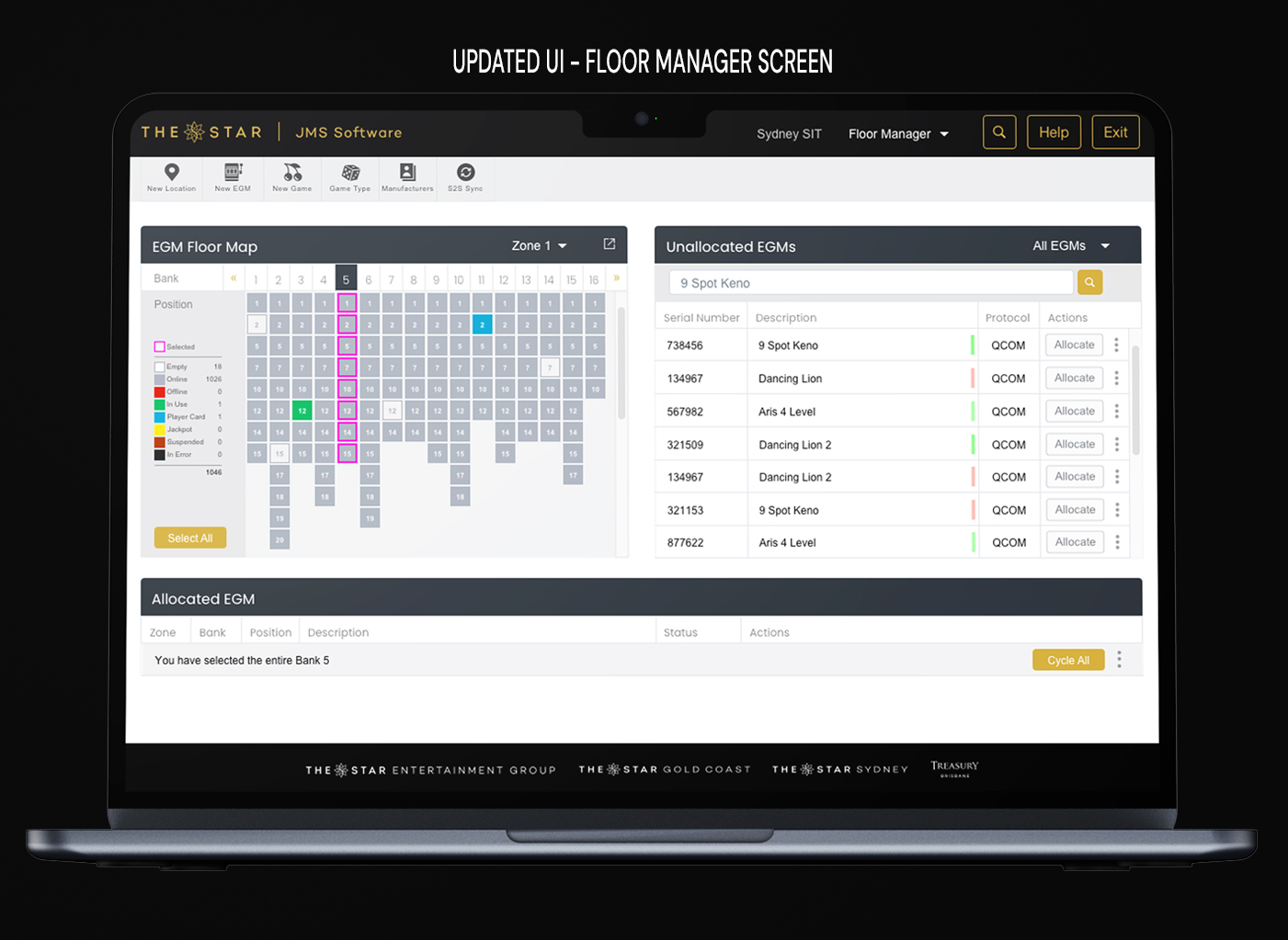
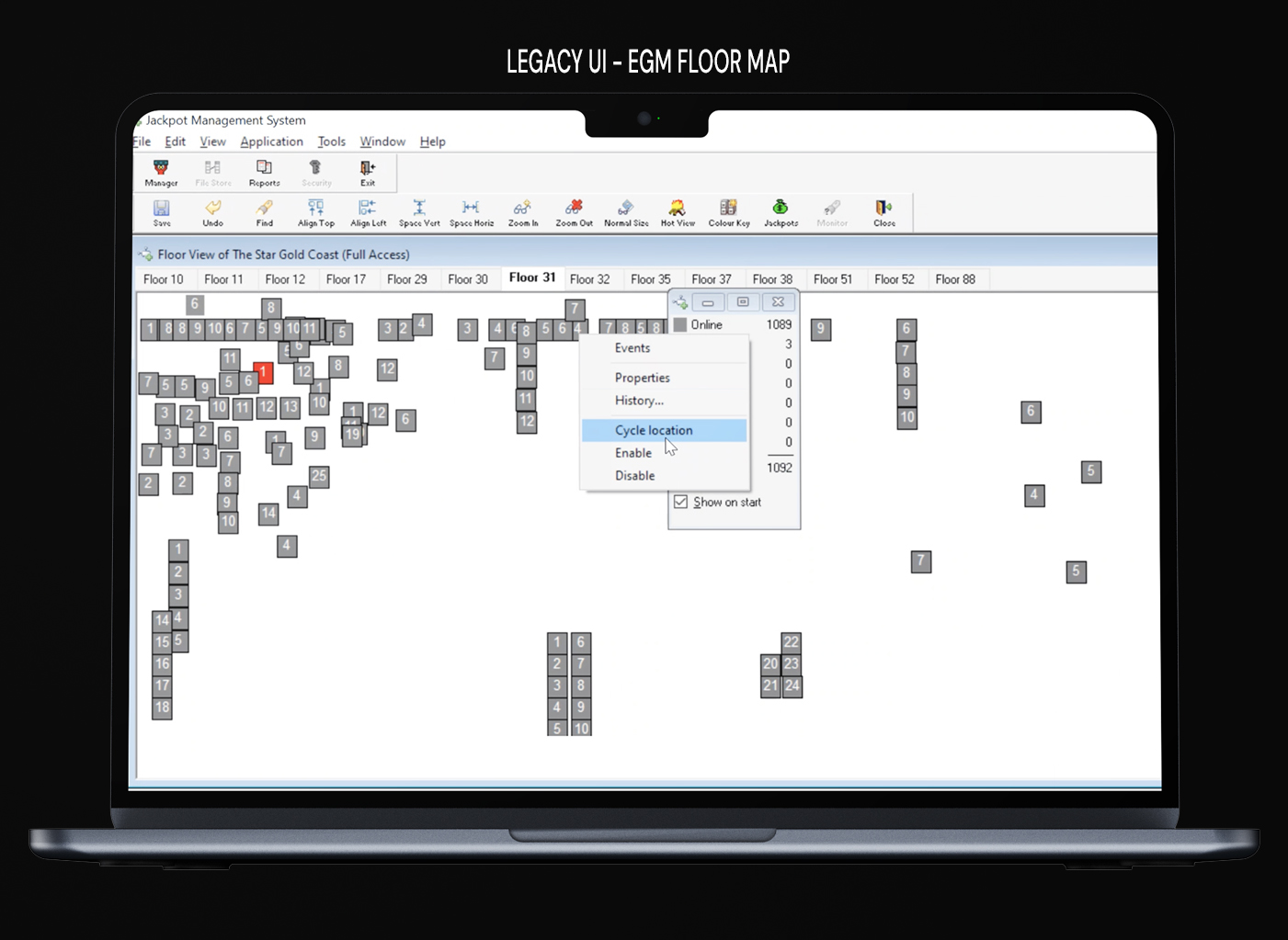
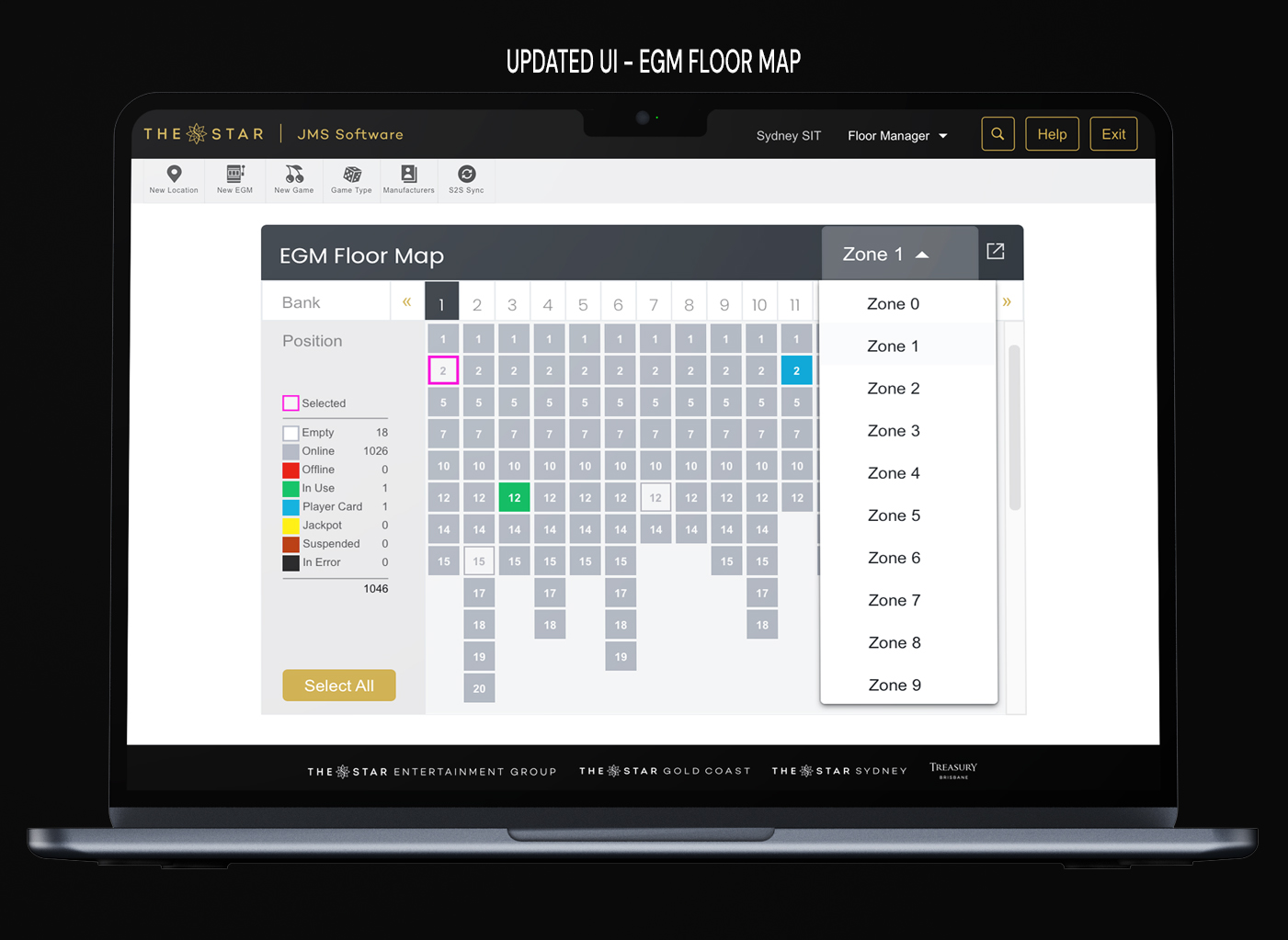
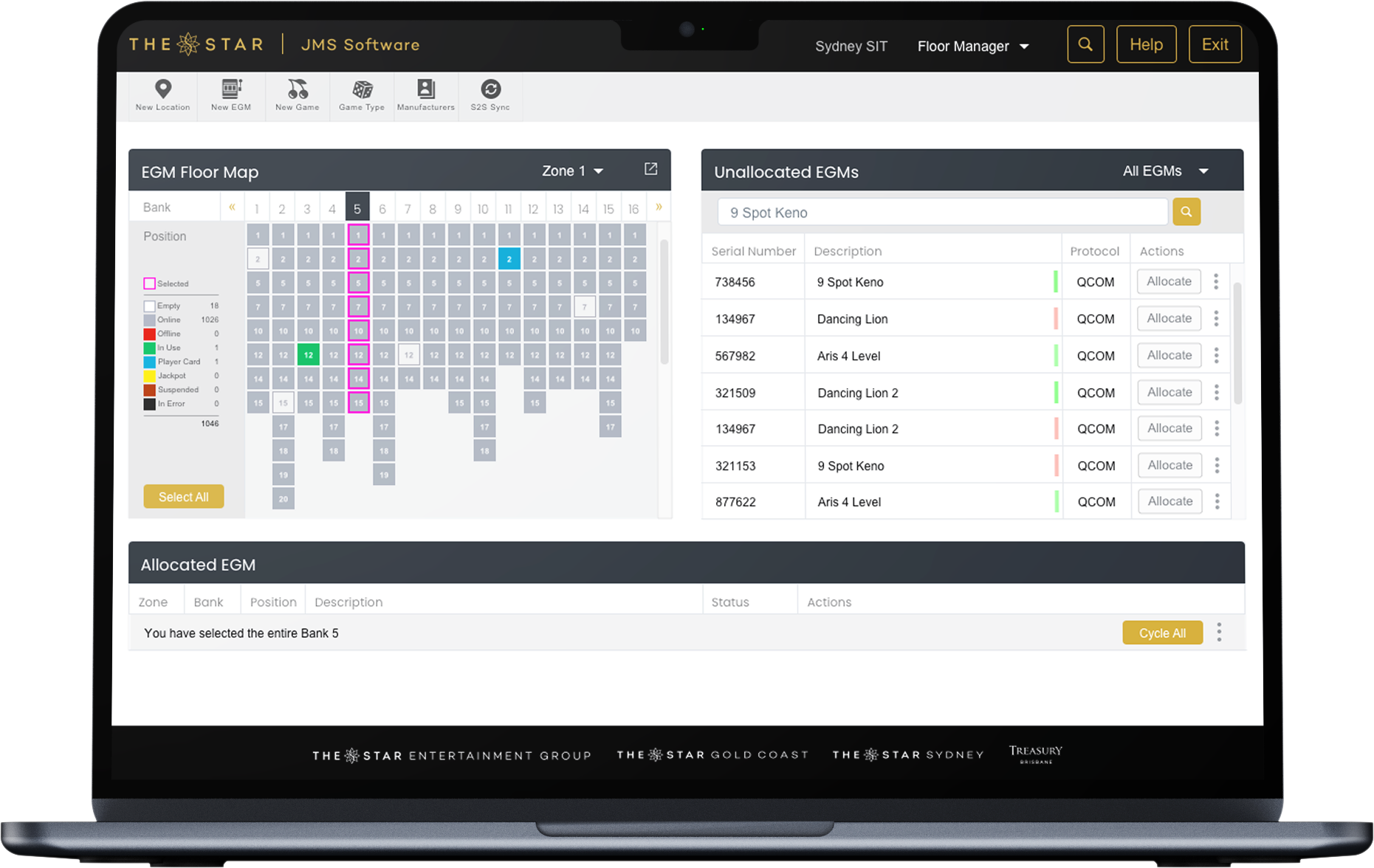
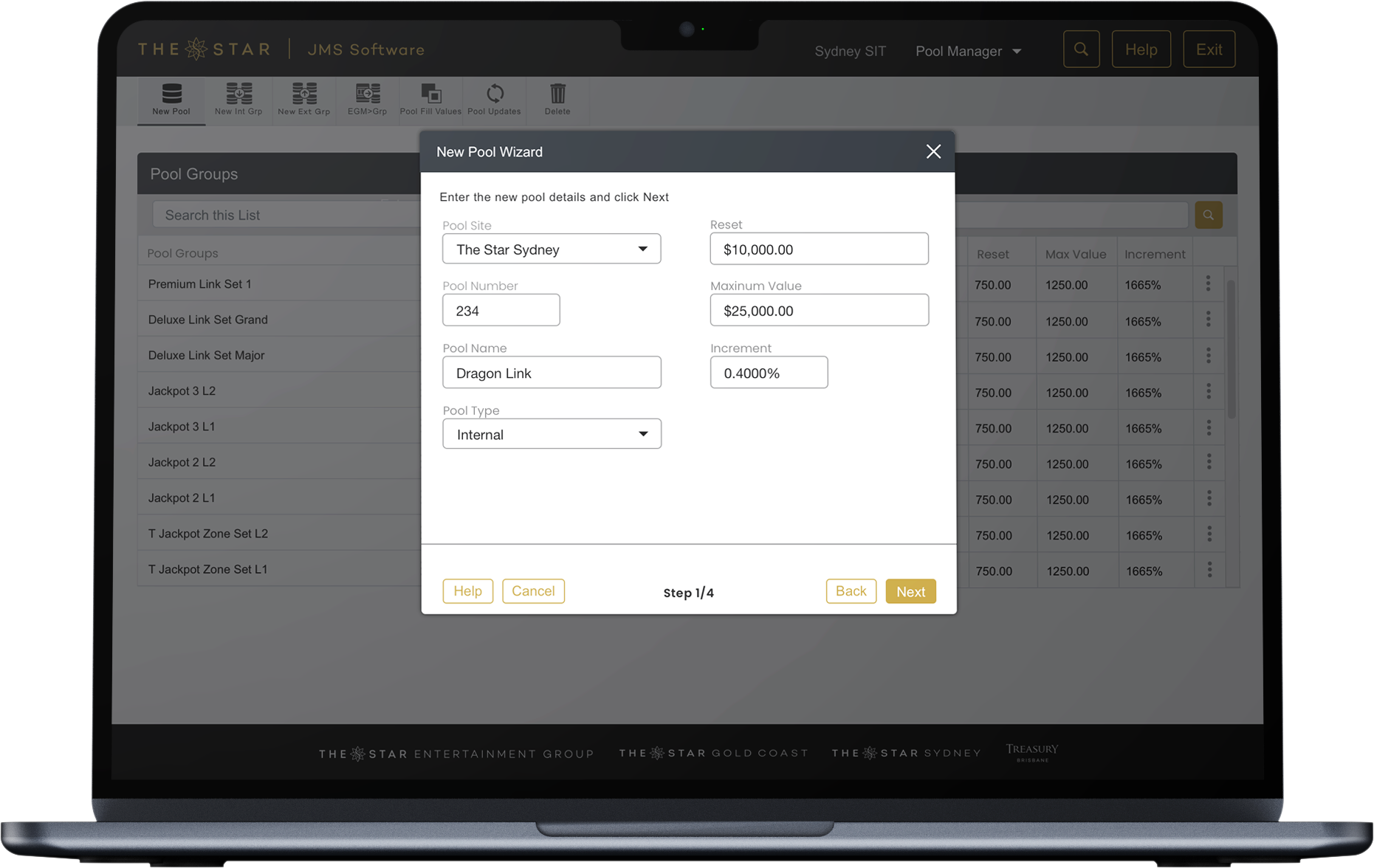
JMS UI Comparison A
JMS UI Comparison B
JMS UI Comparison C
JMS UI Comparison D
JMS UI Comparison E
JMS UI Comparison F

Styleguide for Internal Project Documentation
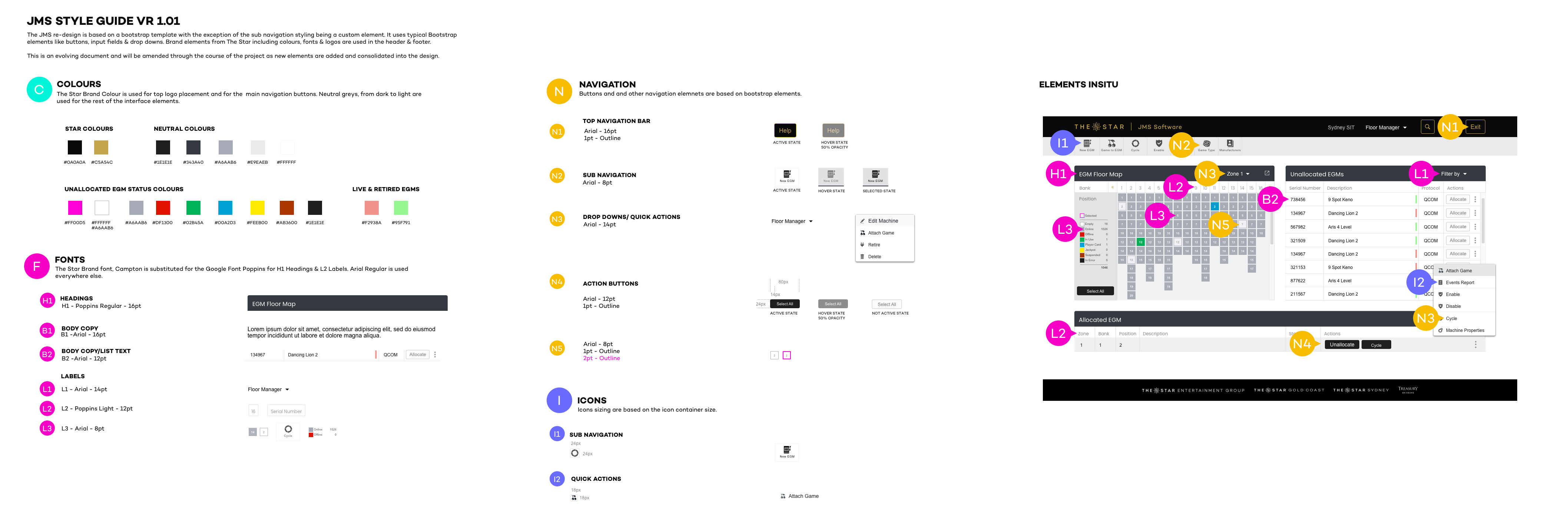
Styleguide for Internal Project Documentation

04 — Where We Landed

Project
Outcomes

The redesigned JMS delivered a 30% improvement in common task completion times — transitioning from a legacy operational tool to a modern enterprise platform improving stakeholder confidence and reducing training time.

↑ 30% Faster
Task Completion Time
Streamlined workflows reduced multi-step processes into single-screen interactions — with up to 30% faster completion rates for common tasks such as EGM allocation and jackpot configuration.
↓ Reduced
Cognitive Load
Improved hierarchy and floor-map visualisation reduced the need to cross-reference multiple windows — decreasing the number of steps required to complete critical operational tasks.
↑ Improved
Training & Onboarding
More intuitive navigation and clearer interaction patterns reduced onboarding time for new users — making the system faster to learn and easier to operate correctly under pressure.
↑ Elevated
Product Perception
Transitioned from a legacy tool to a modern enterprise platform — improving stakeholder confidence, internal adoption, and positioning the system for long-term scalability.
Next Project
Star App
Redesign