Case Study

StarCare Gaming Limits.

Project
StarCare is a responsible gambling feature embedded within The Star app enabling users to set financial limits and manage play time in real time.
Role
UX Research
Product Design
Stakeholder Engagement
Platform
iOS & Android
Mobile App
Deliverables
UX Strategy
Wireframes & IA
User Journeys
High-Fidelity POC

Challenge

Design a digital experience that enabled members to set and manage gaming limits while meeting strict responsible gaming requirements — without making the experience feel intimidating or overly restrictive.

Key Insight

Reframing responsible gaming — not as a restriction, but as a personal tool for staying in control — was central. If members felt supported rather than restricted, they would be more likely to engage with the feature proactively.

Design Response

I designed a guided, supportive experience that helped members easily set, understand and manage their gaming limits through clear language, contextual information and visual feedback — turning a regulatory requirement into a practical self-management tool.

Outcome

The solution created a more approachable and intuitive responsible gaming experience that supported customer wellbeing while meeting regulatory obligations — reinforcing The Star's commitment to responsible play.

UX Workshops & Discovery

Workshops with compliance, product, and gaming operations teams defined the regulatory framework and shaped the design principles that would guide every subsequent decision.

Phase 01
Regulatory Mapping
Mapped the full set of regulatory requirements for responsible gambling features.
Phase 02
Behavioural Analysis
Identified the highest-risk moments in the gaming journey where behavioural friction would be most effective.
Phase 03
Feedback System Design
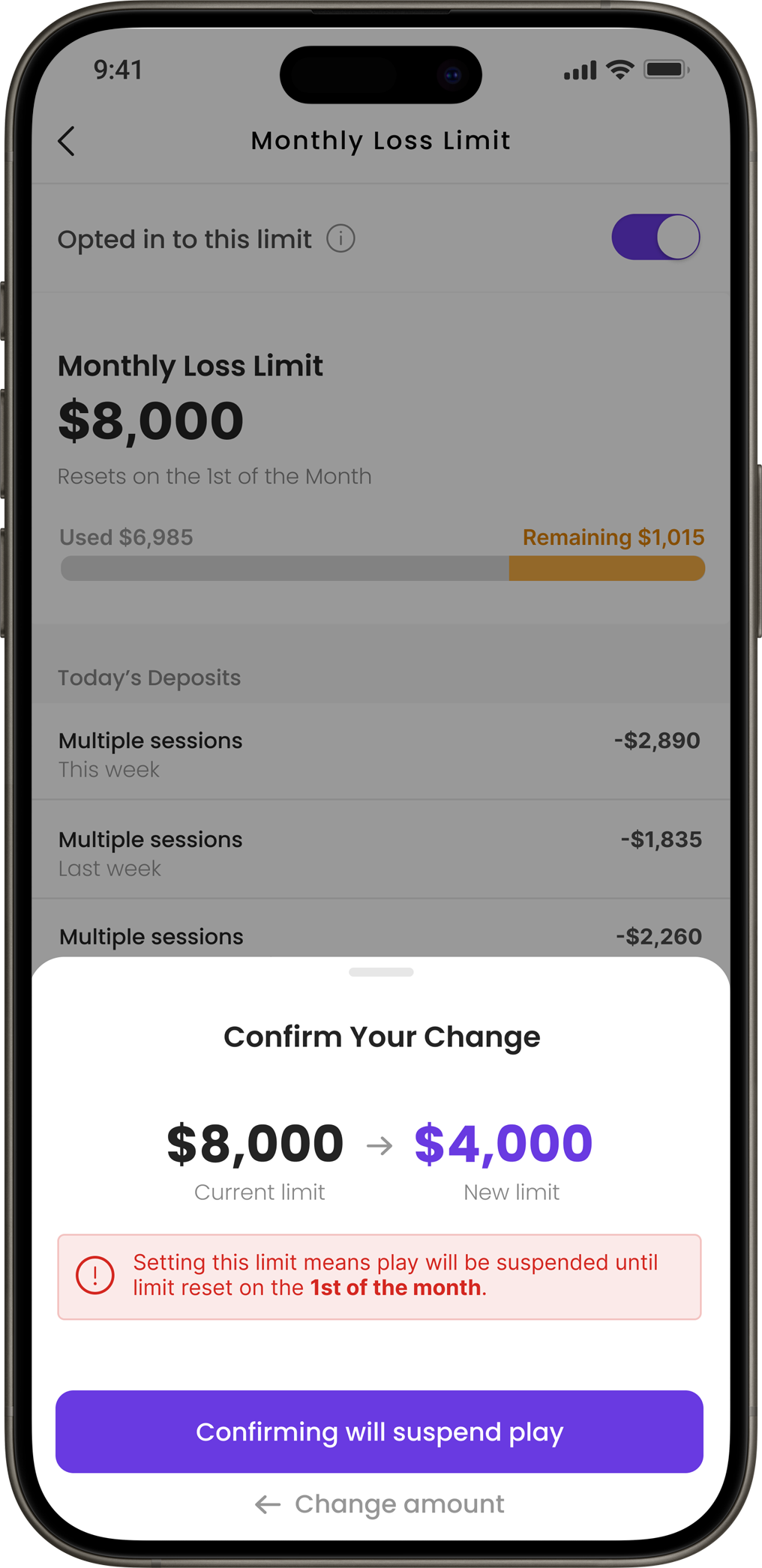
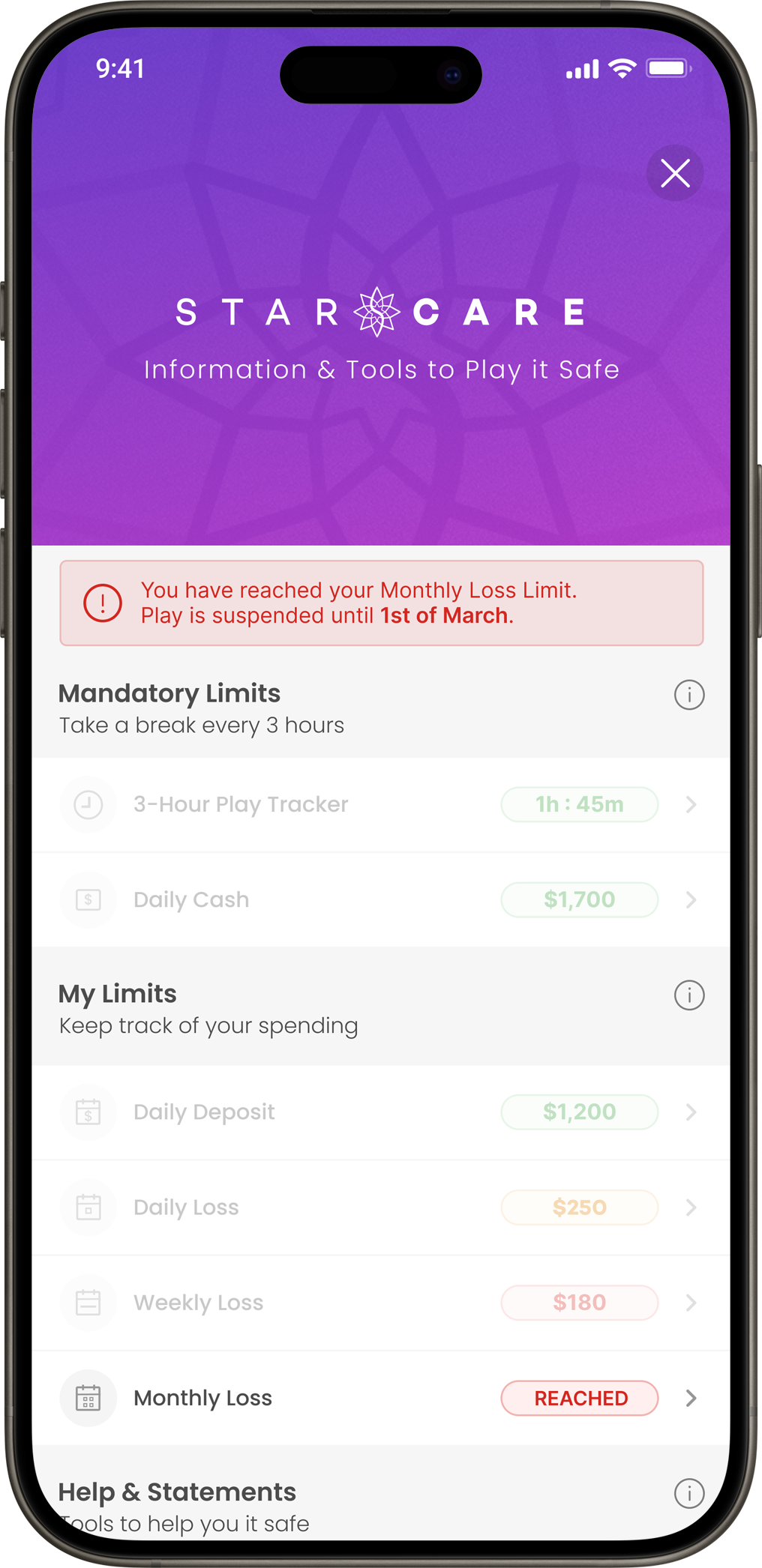
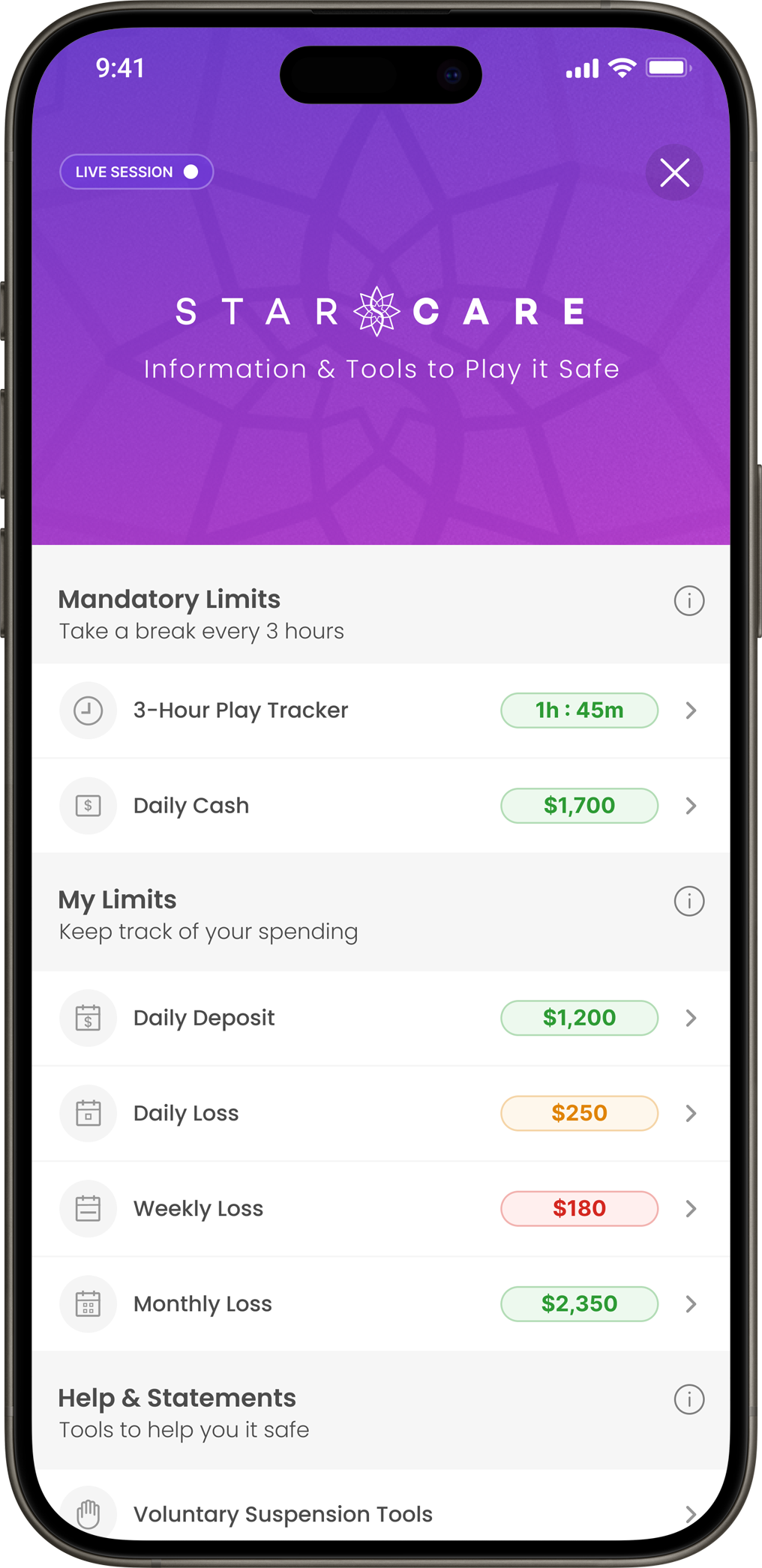
Designed the traffic-light feedback system as a glanceable, real-time limit indicator — Green, Orange, and Red thresholds surfacing limit status at a glance.
Phase 04
Intervention Modelling
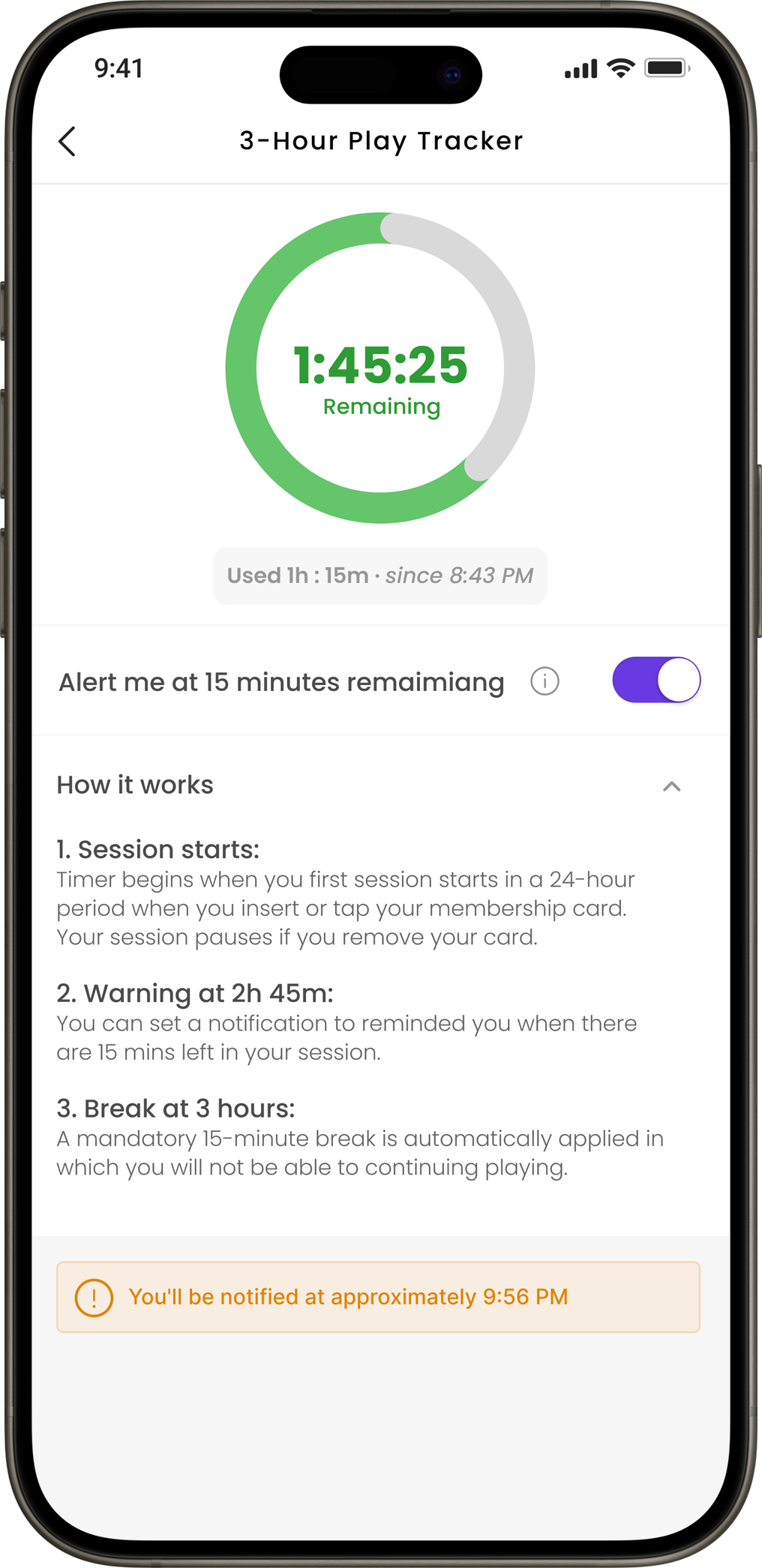
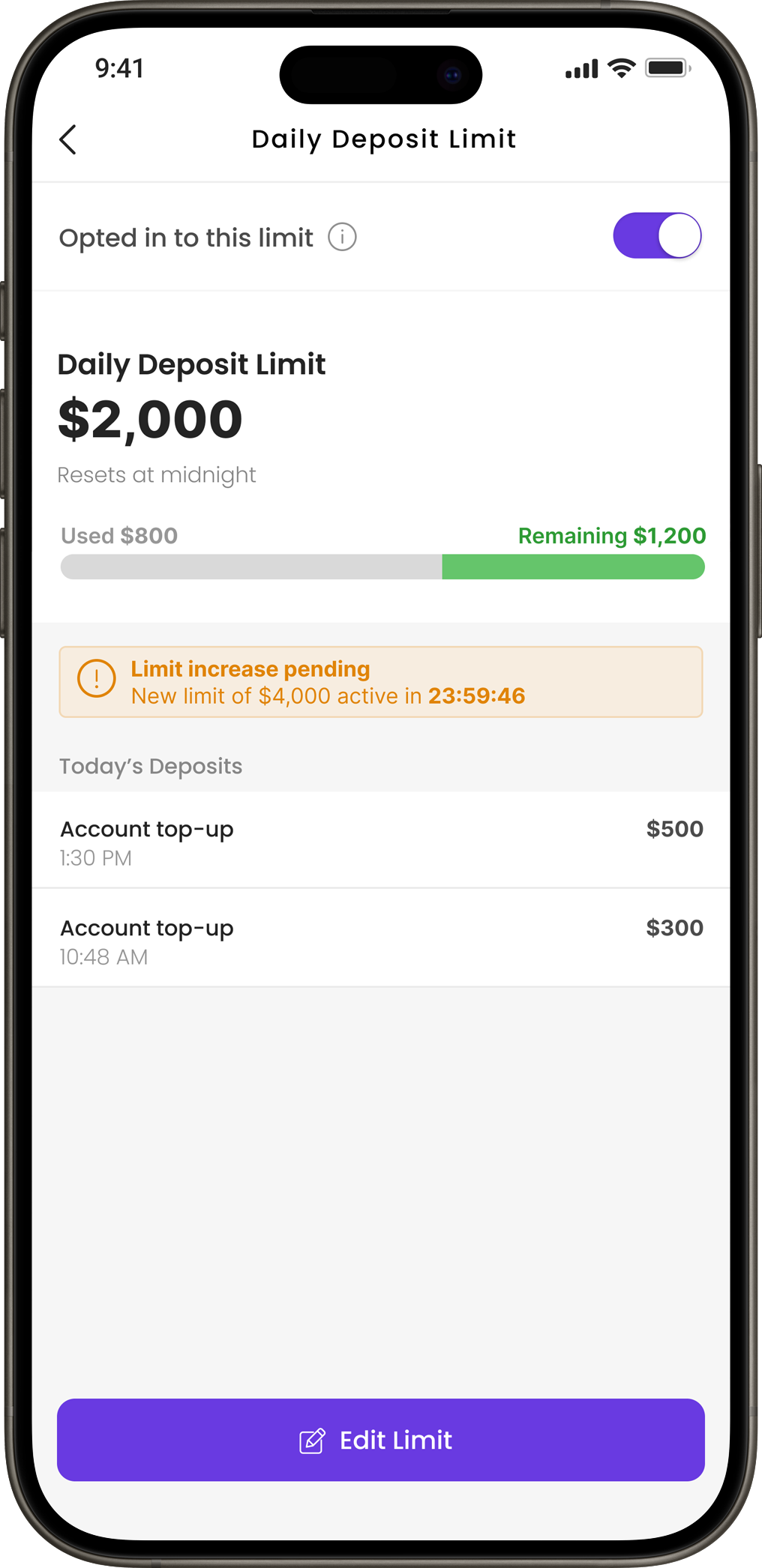
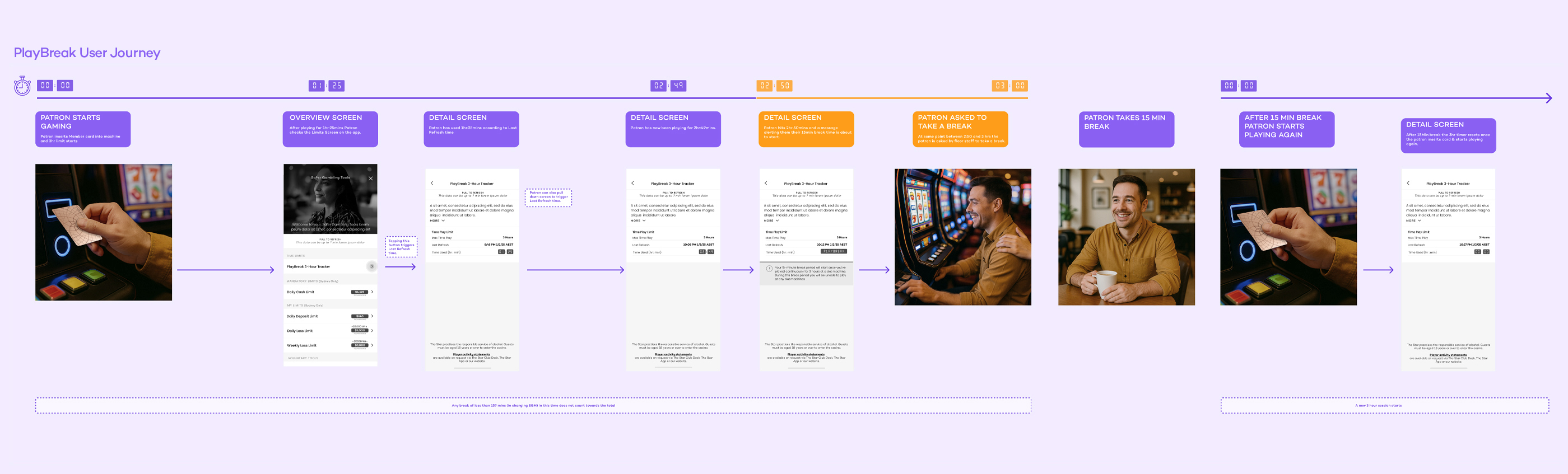
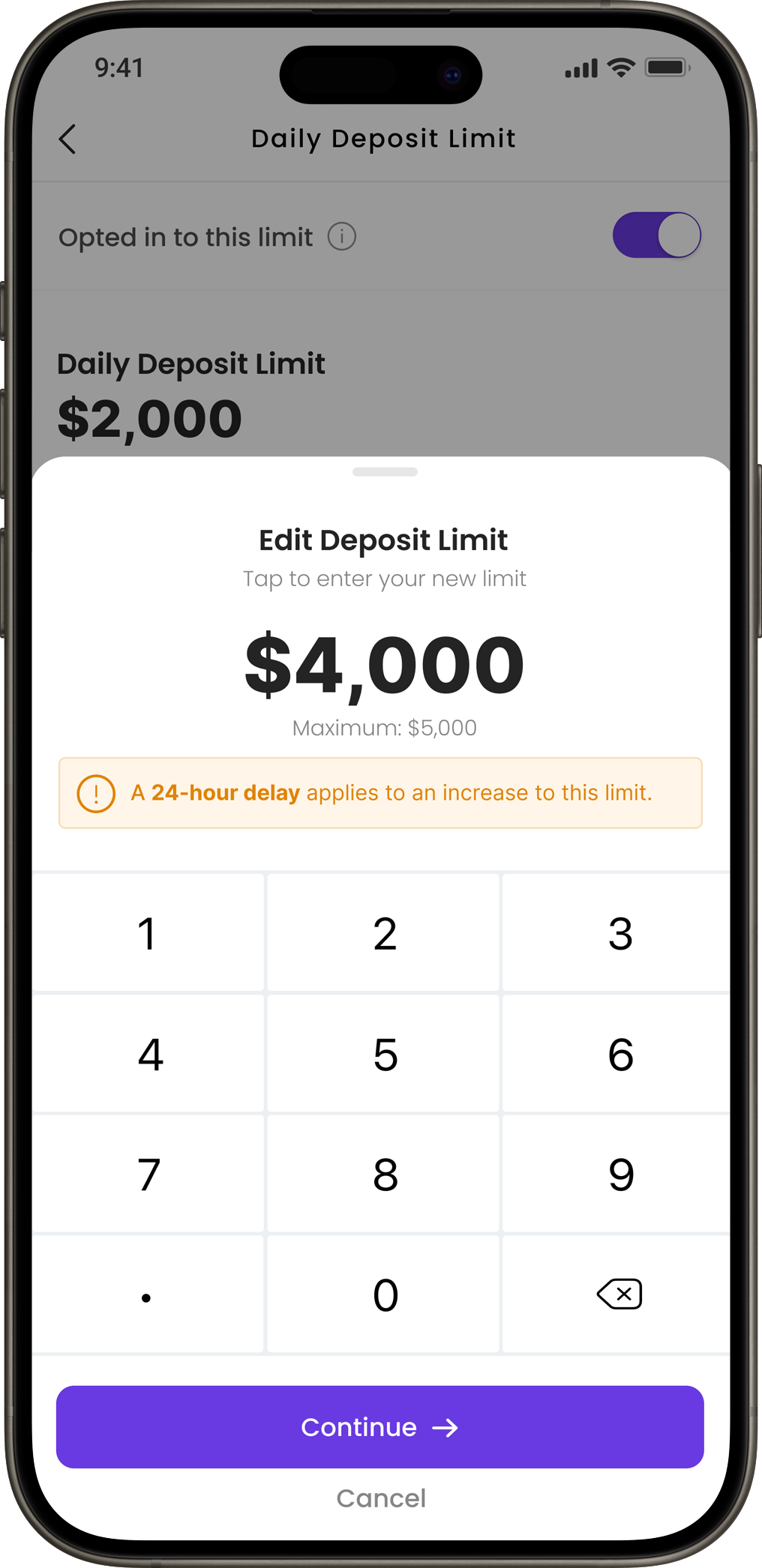
Defined the 3-Hour Time Play Tracker and Delay on Limit Increases as two complementary intervention layers.

Journey Maps & Behavioural Flows

Journey maps bridged the app experience with real-world player behaviour — illustrating when and how the system would intervene during active play, and helping stakeholders visualise the experience.
Journey Maps & Behavioural Flows
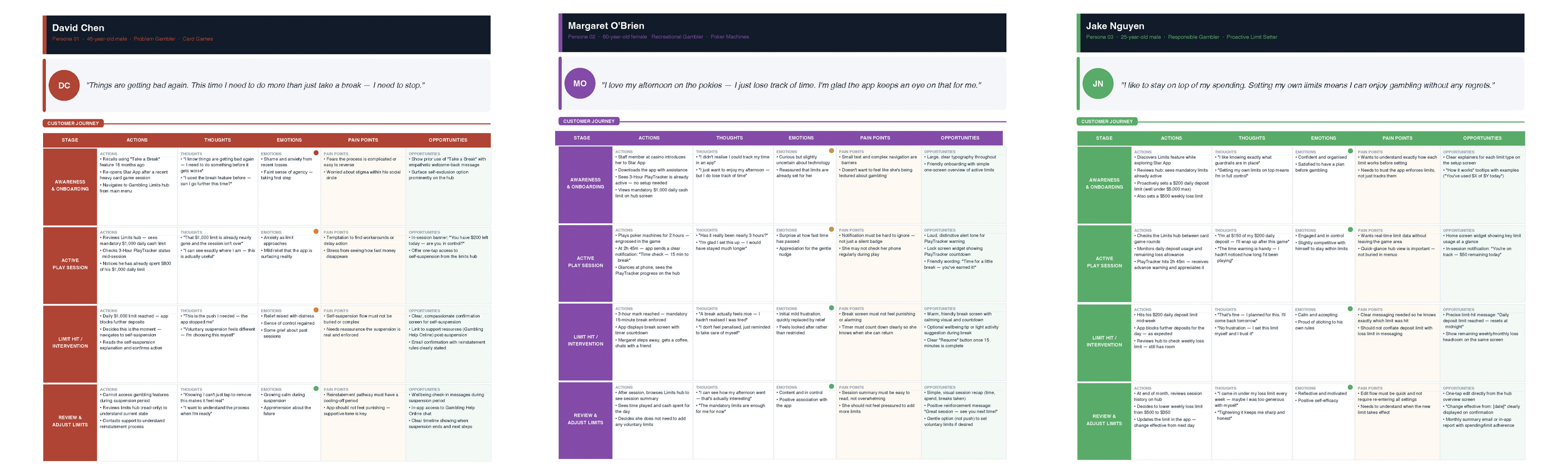
Personas

UX/UI Iterations & Testing

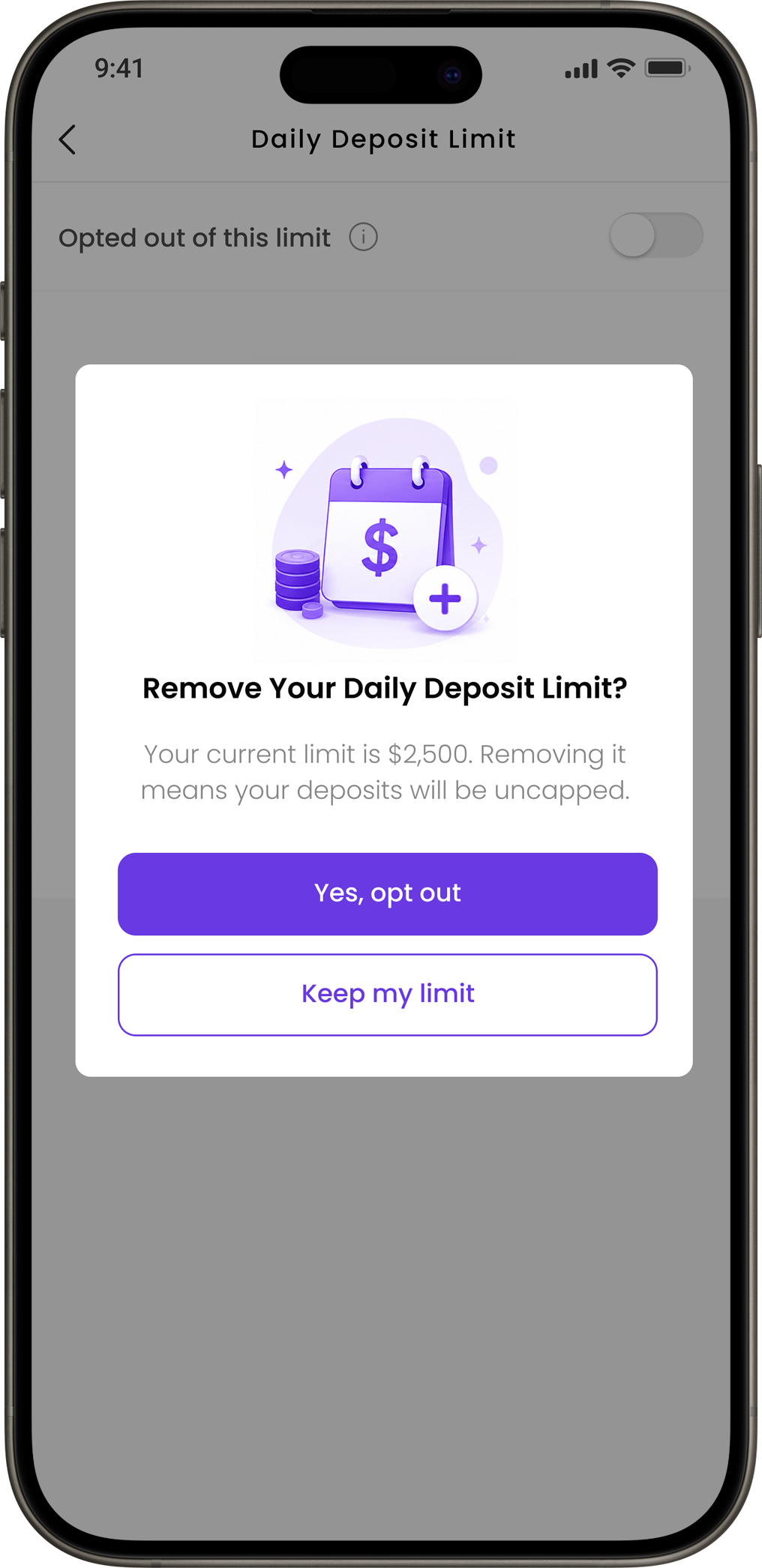
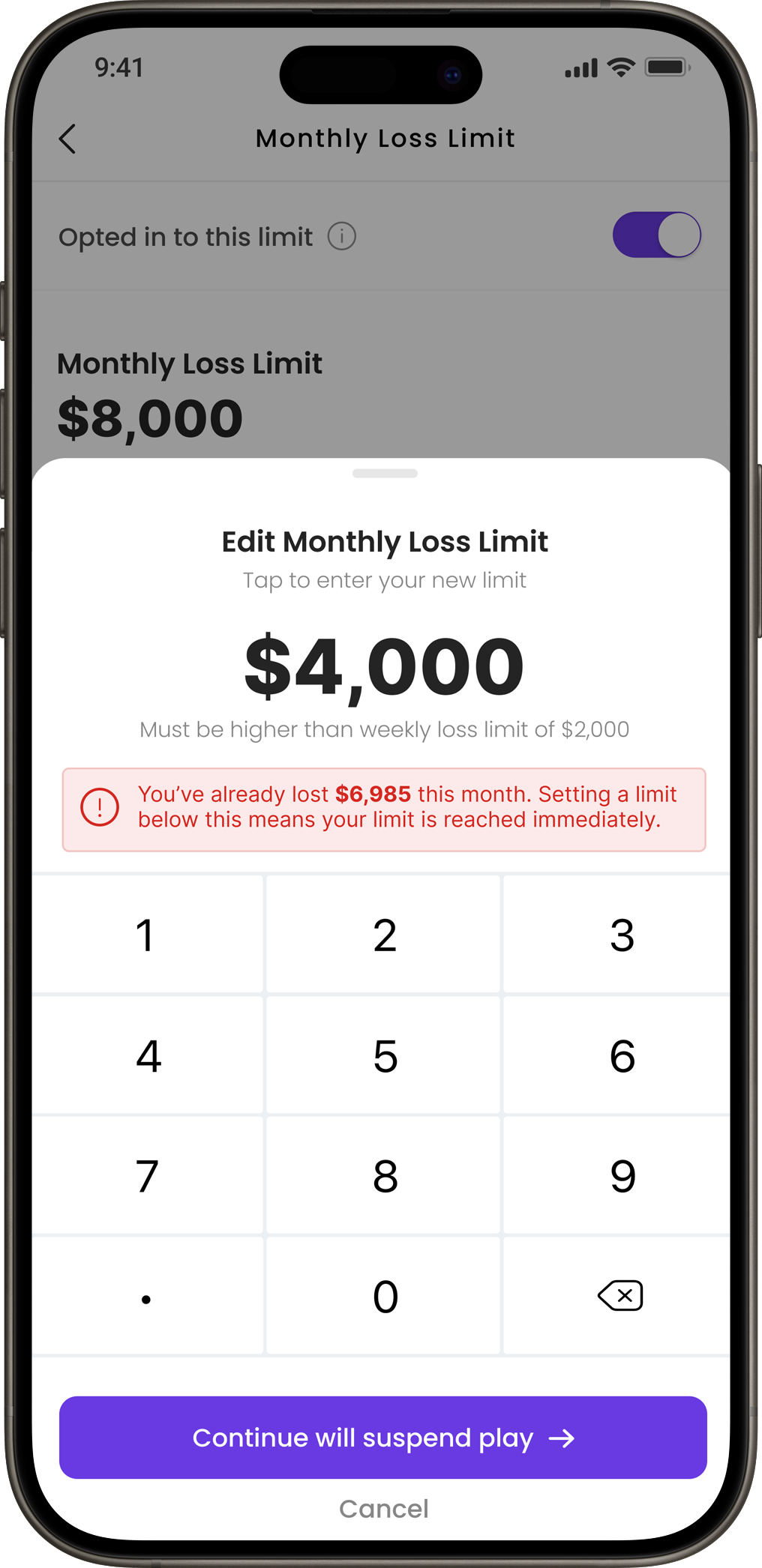
The limits interface went through multiple low-fidelity iterations — testing different approaches to editing and setting limits, opting in and out, and warning users as they approached their limit threshold.
Iterating with AI

Claude was used to iterate interaction patterns and validate complex business rules — rapidly stress-testing edge cases in the limit-setting logic and time-tracker flows before committing to high-fidelity design. A low-fidelity POC was also tested with users to collate responses, revealing a strong preference for Version 1 at 76% — favoured for its simplicity and clear differentiation between mandatory and user-set limits. View the survey here ↗

Low Fidelity Prototype 01

Low Fidelity Prototype 02

Clickable POC StarCare

The high-fidelity prototype brought the limits experience to life — translating the low-fidelity POCs into high-fidelity screens, allowing stakeholders to navigate the key journeys and experience the proposed design firsthand.

High-Fidelity POC

Four clickable journeys covering the core StarCare interactions — setting a limit, increasing a limit, decreasing a limit, and the 3-hour play tracker.

Set Limit

Increase Limit

Decrease Limit

Play Tracker

High-Fidelity Screens

Final UI across the StarCare experience — limit setting, traffic-light status indicators, limit adjustment confirmation flows, and the 3-hour time tracker — all within an updated Star App visual design system.

High-Fidelity Screen 01
High-Fidelity Screen 02
High-Fidelity Screen 03
High-Fidelity Screen 04
High-Fidelity Screen 05
High-Fidelity Screen 06
High-Fidelity Screen 08
High-Fidelity Screen 07

The Impact

↑ Introduced
Behavioural Intervention Design
Two complementary friction layers — a mandatory delay on limit increases and a 3-hour session tracker — created deliberate pause points that discouraged impulsive, high-risk decisions.
↑ Introduced
Real-Time Limit Feedback
A colour-coded status indicator surfaced limit thresholds at a glance — keeping financial boundaries front of mind throughout play, rather than hidden away in settings.
↑ Embedded
Regulatory Compliance
Translated complex regulatory requirements into intuitive UX patterns — ensuring full compliance without sacrificing usability or creating friction for responsible players.
↑ Achieved
Member Adoption
Promotional on-property materials supported awareness of the new feature, with a steady uptake of 24% of members utilising one or more of the personal limit settings.
Next Project
Cashless Play Digital Wallet